Felton's Assassination of Buckingham
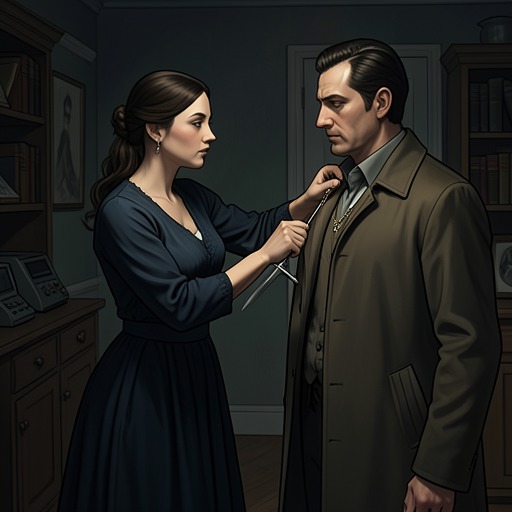
The Three MusketeersFelton's Assassination of Buckingham is the fatal turning point in which Milady's influence over John Felton produces the death of George Villiers, Duke of Buckingham. The murder occurs at the moment when Buckingham's attention is diverted by a letter from France; Felton uses the knife associated with Milady's staged self-stabbing to strike the duke, and Buckingham's immediate cry, “Ah, traitor,” cried Buckingham, “you have killed me!” gives the scene its stark recognition of irreversible loss. The assassination ends Buckingham's life, exposes Felton as the killer, and sends shock through the palace and town.
Causes and Background
The attack is prepared through deception rather than open combat. Felton possesses the knife with which Milady had stabbed herself, and he keeps it open against his bosom while approaching Buckingham. That weapon connects the assassination to Milady's manipulation and to the earlier performance of injury that helped shape Felton's understanding of the political conflict. The murder therefore emerges from a chain of calculated appearances: a wound presented as evidence, a conviction hardened into action, and a weapon carried into the duke's presence under cover of apparent opportunity.
The immediate circumstance is a moment of distraction. Buckingham begins to spring toward his sword when Felton's attack becomes clear, but Patrick enters crying that he has brought a letter from France. Buckingham forgets everything while trying to determine from whom the letter has come. The interruption does not merely delay the struggle; it creates the precise opening on which the assassination depends. A political message, expected to clarify the duke's circumstances, instead becomes the instrument of his vulnerability.
The Attack and Buckingham's Death
When Buckingham cannot draw his sword in time, Felton crosses the room in a single bound and plunges the knife into the duke's side up to the handle. The action is sudden, close, and physically decisive. Buckingham's cry identifies both the act and its betrayal: the assailant is not simply an enemy who has defeated him in combat, but a traitor who has violated the conditions under which the duke believed himself able to receive a visitor and attend to a message.
Felton does not remain to confront the consequences. He looks around for a means of escape, sees that the door is free, and rushes through the next chamber, where deputies from La Rochelle are waiting. He then makes for the staircase, but Lord de Winter intercepts him on the first step. Lord de Winter recognizes what has happened from Felton's appearance: he is pale, confused, livid, and stained with blood on both hands and face. His grasp at Felton's throat and his cry that he had known and guessed the truth, but had arrived too late by a minute, turn the fleeing assassin's escape into immediate capture and give the scene a second reversal.
The duke's death is confirmed only after the violence has passed. Patrick cries out, Buckingham tries once more to smile, and the surgeon arrives terrified after being summoned from the admiral's ship. The surgeon takes Buckingham's hand, holds it briefly, lets it fall, and declares that everything is useless and that he is dead. This physical gesture—the hand lifted and then released—makes the medical verdict final. The earlier cry of murder becomes a confirmed political death rather than an unverified alarm.
Consequences and Aftermath
Buckingham's assassination produces consequences beyond the room in which it occurs. Once Patrick cries that the duke is dead, the crowd re-enters the apartment, and consternation and tumult spread throughout the palace and town. The event thus moves rapidly from a concealed personal attack to a public crisis. The presence of the deputies from La Rochelle in the adjoining chamber also places the murder within the wider conflict surrounding the siege and the strained relations between England and France.
The scene's value shift is absolute: Buckingham moves from armed authority to helplessness, and from living political actor to dead body within moments. Felton's spoken charge of treachery and the surgeon's plain declaration of death mark two stages of recognition. First, Buckingham understands that he has been betrayed; afterward, the surrounding world understands that the duke cannot be saved. The narrative withholds no restorative turn after the wound. Its final movement is from attempted escape to capture, from hope of treatment to medical certainty, and from private violence to collective disorder.
Narrative Significance
The assassination joins personal manipulation, political rivalry, and the machinery of war in one compressed episode. Felton's knife is at once a weapon and a remnant of Milady's deception, while the letter from France shows how easily political communication can be turned against the person who depends upon it. Buckingham's instinctive movement toward his sword suggests the world of military power, but the decisive action occurs before that power can be brought into play. The event therefore exposes the vulnerability beneath rank, command, and ceremony.
Its dramatic force also lies in the contrast between speech and action. Buckingham's response to the letter suspends his defensive action; Felton's attack converts that suspension into death; Lord de Winter's recognition arrives with the force of accusation but not in time to prevent the crime; and the surgeon's words finally close the sequence by naming the result. No later explanation can undo the knife's action. Felton's Assassination of Buckingham consequently functions as both a murder scene and a structural hinge: it confirms the destructive reach of Milady's schemes, removes Buckingham from the political struggle, and leaves the palace and town to absorb the shock of a death that began with a momentary lapse of attention.